6 Pre Transfer Tank Grounding Checks for Facility Managers

Yes, metallic storage tanks and transfer operations must be earthed. Attach and verify an earth clamp before any transfer begins, following the field rule “clamp on first, clamp off last.” This isn’t optional guidance. It’s the baseline expectation under IEC TS 60079-32-1, NFPA 77, and France’s Arrêté du 1er juillet 2004.
TL;DR:
- Grounding systems must use a proper clamp connected to unpainted metal and be verified through a visual indicator or resistance measurement before any transfer starts.
- Passive clamps rely on manual checks and can fail silently if corrosion or damage occur, whereas monitored systems continuously verify connection integrity and trigger automatic safety measures.
- Regular checks are essential, including daily visual inspections and periodic electrical testing below 10 ohms resistance, with records maintained for audits.
- Grounding requirements are governed by IEC TS 60079-32-1, NFPA 77, and French regulations, all emphasizing the need for verified electrical continuity regardless of tank size.
- Procurement should specify features like alarm relay, clear status indicators, automatic interlocks, and compliance with zone certifications to ensure safety and regulatory adherence.
Table of Contents
- What Is Mise à la Terre Cuves and Why Does It Matter?
- What Should You Check Before Using a Tank or IBC?
- Passive Clamps, Monitored Systems, and Bonding: What’s the Difference?
- How Do You Ground a Storage Tank Before Transfer, Step by Step?
- Which Standards Govern Tank Grounding Requirements?
- How Often Should You Test and Log Tank Grounding?
- What Should Go Into a Grounding Equipment Tender?
- Indelec’s Approach to Tank Grounding at Scale
- What Do Safety Officers Get Wrong Most Often?
- Get a Site Survey Before Your Next Tank Installation
- Sources
- FAQ
What Is Mise à la Terre Cuves and Why Does It Matter?
Mise à la terre cuves, or tank grounding, means creating a low-resistance electrical path from a metallic tank to earth so static charge generated during filling or transfer has somewhere to go besides a spark. Fuel and solvent movement through pipes and hoses generates electrostatic charge through friction, a phenomenon engineers call streaming current. Without a verified path to earth, that charge accumulates on the tank shell until it discharges, and in a vapor-rich environment, that discharge is an ignition source.

Facility managers searching for tank earthing system guidance are usually trying to solve one of two problems: they’re setting up a temporary fuel tank on a job site, or they’re auditing a fixed tank farm ahead of an inspection. Both cases hinge on the same physics and largely the same regulatory expectations, even though the paperwork differs. Prevention BTP’s guidance on site fuel storage confirms that even relatively small diesel tanks in site containers need grounding and ATEX signage. Scale doesn’t change the requirement.
What Should You Check Before Using a Tank or IBC?
Run this five-minute pass before any transfer starts. If any item fails, stop the operation and fix it before proceeding.
- Confirm the responsible person and permit-to-work status. Someone trained needs to own the operation, not just be nearby.
- Inspect the clamp and cable. Look for corrosion, frayed strands, or a cracked jaw that won’t bite through paint or rust.
- Verify the earth point itself. A clamp attached to a painted surface or a loose bracket isn’t grounded, it’s decorative.
- Check interlock readiness on any monitored system, confirming the indicator shows a permissive state before connecting hoses.
- Confirm ATEX signage is posted and remove any ignition sources, phones, lighters, unrated tools, from the immediate zone.
- Bond ancillary metalwork, including funnels, ladders, and transfer pumps, so nothing sits at a different electrical potential than the tank.
Passive Clamps, Monitored Systems, and Bonding: What’s the Difference?
Grounding equipment falls into three practical categories, and picking the wrong one for the site’s risk level is one of the more common compliance gaps facility managers overlook.
- Passive clamp-and-cable systems. A manual clamp and a cable running to a grounding rod or structural steel. These work fine for low-frequency, low-volume operations with disciplined operators, but they rely entirely on someone remembering to check the connection. There’s no feedback if the clamp is on a painted surface or the cable is severed inside its jacket.
- Active or monitored earthing systems. These continuously monitor loop resistance and won’t permit a transfer to start until the connection reads clean. Devices like the Earth-Rite II RTR recognize when a tanker is connected, show a red or green status LED, and provide an interlock output that can physically stop a pump if the loop resistance drifts out of range. Monitored systems remove the guesswork that passive setups depend on, which matters most on high-throughput sites or anywhere ATEX zoning applies.
- Equipotential bonding. This ties ancillary metalwork, funnels, hose reels, catwalks, into the same electrical reference as the tank, so charge can’t jump between components sitting at different potentials.
Fixed tank farms and road tanker connections increasingly default to monitored systems, while short-duration site tanks and IBCs still often rely on passive clamps paired with strict daily checks.
How Do You Ground a Storage Tank Before Transfer, Step by Step?
Grounding isn’t a single action, it’s a sequence, and skipping a step is how incidents happen.
- Prepare the site. Isolate ignition sources, confirm the area’s ATEX classification, and assign a trained operator who understands the equipment in front of them.
- Attach the clamp. Select a clamp rated for the surface and press it into bare, unpainted metal for true metal-to-metal contact. Route the cable so it can’t get pinched under wheels or crushed by the hose reel during the transfer.
- Verify the connection. Check the indicator light on a monitored system, or measure loop resistance directly with a handheld tester. Field guidance built around IEC TS 60079-32-1 generally targets a loop resistance at or below the recommended threshold; if the reading exceeds that, reseat the clamp on a cleaner contact point and retest before doing anything else.
- Monitor during transfer. Keep an eye on the interlock status throughout. Never disconnect the clamp while product is still moving, even if the transfer seems to be running smoothly.
- Close out properly. Clamp off last, after the transfer is fully complete and isolated. Log the operation, including any resistance readings, and flag anything that needs a follow-up test.
Pro Tip:Keep a spare clamp and a short test cable in the site truck. A five-minute swap beats a stalled delivery when a jaw won’t bite cleanly on a rusted flange.
Supplier field guides consistently repeat this exact sequence as the recommended operational SOP, and for good reason: it’s the order that prevents a disconnection from happening mid-transfer.
Which Standards Govern Tank Grounding Requirements?
Three references cover almost every question a facility manager will face on this topic, and each answers a slightly different question.
| Reference | What it covers | Practical takeaway |
|---|---|---|
| IEC TS 60079-32-1 | Electrostatic hazard guidance for hazardous-area operations | Sets the technical basis for the widely used ≤10 Ω loop-resistance target |
| NFPA 77 | Practical guidance on static electricity ignition risk | Commonly referenced alongside IEC guidance for hazard assessment and mitigation |
| Arrêté du 1er juillet 2004 | French rules on temporary fuel storage | Limits certain temporary storage capacities and requires grounding plus ATEX precautions |
- IEC TS 60079-32-1 is the technical anchor most monitored earthing devices are built around, and it’s the standard that gives facility managers a defensible number to cite during an audit.
- NFPA 77 gets cited in tandem with IEC guidance because it addresses the same hazard from a practical risk-management angle rather than a purely electrical one.
- The Arrêté du 1er juillet 2004 matters specifically for temporary installations, capping how much fuel can sit on a site under simplified conditions and requiring grounding as a condition of that allowance.
In practice, these three references translate into a single operational habit: verify the loop electrically, don’t just glance at a cable and assume it’s connected. Sites operating in a classified ATEX zone need to layer zoning requirements on top of the grounding spec itself, since the earthing system’s certification has to match the zone it’s installed in.
How Often Should You Test and Log Tank Grounding?
Verification isn’t a one-time install task, it’s a recurring discipline, and the cadence depends on what kind of check you’re running.
- Daily pre-use checks. A visual inspection of the clamp jaw, cable jacket, and connection point, plus confirming the indicator light shows green before the first transfer of the day.
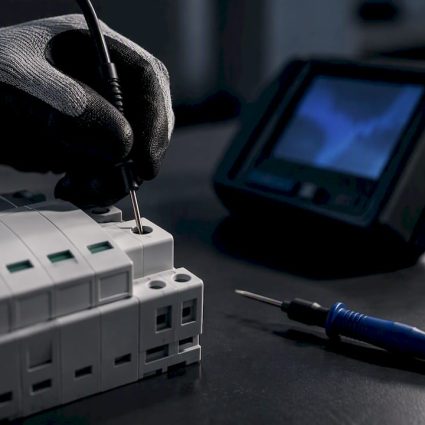
- Periodic electrical testing. A measured loop-resistance test, generally against the 10 ohms or less benchmark manufacturer datasheets tie to IEC guidance, run on a fixed schedule set by your risk assessment.
- Retest triggers. Any time a clamp or cable is repaired, replaced, or involved in an incident, even a minor one, retest before returning it to service.
- Test equipment. Capacitance-resistance testers (CRT devices) simulate tanker capacitance to confirm an earthing system responds correctly under realistic load, which is more reliable than a simple continuity check with a multimeter.
- Recordkeeping. Log the date, operator, resistance reading, and pass/fail outcome in a maintenance ledger. These logs are usually the first thing an inspector asks for, and a gap in the record reads worse than a single failed test that was caught and corrected.
What Should Go Into a Grounding Equipment Tender?
Procurement documents for grounding equipment often read like a vague wish list. Tighten them with specific functional requirements instead.
- Earth verification relay, volt-free output, so it can integrate with existing pump interlocks without rewiring the control panel.
- Visual status indicator (LED or equivalent) readable in daylight from the operator’s normal working position.
- Interlock contacts rated to stop the transfer pump automatically if loop resistance exceeds the set threshold.
- ATEX or IECEx certification matching the zone classification of the installation area, plus an IP rating suited to outdoor exposure.
- Cable and clamp minimum specs, including reel options for sites with variable tanker positioning, and dedicated test points for periodic verification.
Pro Tip:Ask any bidder for their certification paperwork before comparing price. A cheaper unit that isn’t rated for your zone classification isn’t actually a cheaper option, it’s a compliance liability with a lower sticker price.
Indelec’s Approach to Tank Grounding at Scale
Indelec builds grounding programs around a site survey first, not a catalog page. That survey identifies contact points, existing earth infrastructure, and zoning before any equipment gets specified. From there, grounding design, installation, and verification follow as a connected sequence, with supervised commissioning built in so the resistance readings are checked before the system ever goes live, not discovered as a problem months later during an audit.

What Do Safety Officers Get Wrong Most Often?
Painted contact points, skipped verification, and undertrained operators cause most grounding failures we see referenced in field guidance. The fix is unglamorous: daily checklists, enforced interlocks, and documented training that actually gets repeated, not filed once and forgotten.
— INDELEC
Get a Site Survey Before Your Next Tank Installation
The advantage isn’t a bigger catalog, but the engineering behind the install: a team that surveys your site, designs the grounding layout around your actual tank types and transfer rates, and supervises commissioning to help avoid bad connections during live deliveries.

If you’re planning a new tank installation, adding monitored earthing to an existing tank farm, or preparing for an ATEX compliance review, Indelec’s protection contre la foudre services cover the full sequence: risk analysis and technical study, installation, and ongoing verification and maintenance. When you reach out, include your site description, tank types and volumes, expected transfer rates, and ATEX zoning if it’s already been classified. That information lets Indelec scope a site survey instead of guessing at a quote, and the survey is the natural next step before any equipment gets specified. Explore the grounding product range or request a site survey to get started.
Sources
FAQ
How do you ground a tank in a foundation excavation?
Grounding in fond de fouille means burying a bare copper conductor or earth electrode in the excavation before the foundation is poured, connecting it to the structure’s main earthing terminal. For a storage tank specifically, that buried electrode becomes the reference point your clamp connects to during transfer operations.
What standards govern tank grounding?
The main references are IEC TS 60079-32-1 for electrostatic hazard guidance, NFPA 77 for practical ignition-risk assessment, and France’s Arrêté du 1er juillet 2004 for temporary storage rules. Together they set both the technical verification target, generally 10 ohms or less loop resistance, and the operational duties around signage and grounding.
How do you do a proper tank grounding?
Attach a clamp to bare, unpainted metal for true metal-to-metal contact, then verify the connection either through a monitored system’s indicator light or a measured resistance reading before any product moves. Follow “clamp on first, clamp off last,” and never disconnect while a transfer is still active.
What is the operating procedure for tank grounding?
The sequence runs preparation, attachment, verification, monitoring during transfer, and closeout: isolate ignition sources, connect the clamp to a clean contact point, confirm the loop reads within range, watch the interlock status throughout, then disconnect only after the transfer is fully complete. Indelec’s site survey and installation process follows this same logic when designing grounding for a facility.
What’s the difference between passive and monitored earthing systems?
A passive system is a manual clamp and cable that relies on the operator to check the connection, while a monitored system continuously tracks loop resistance and can automatically halt a transfer through an interlock if the connection degrades. Monitored systems are generally recommended for ATEX zones or high-throughput sites where a missed manual check carries higher consequences.