Lightning Protection for Logistics Warehouses in France
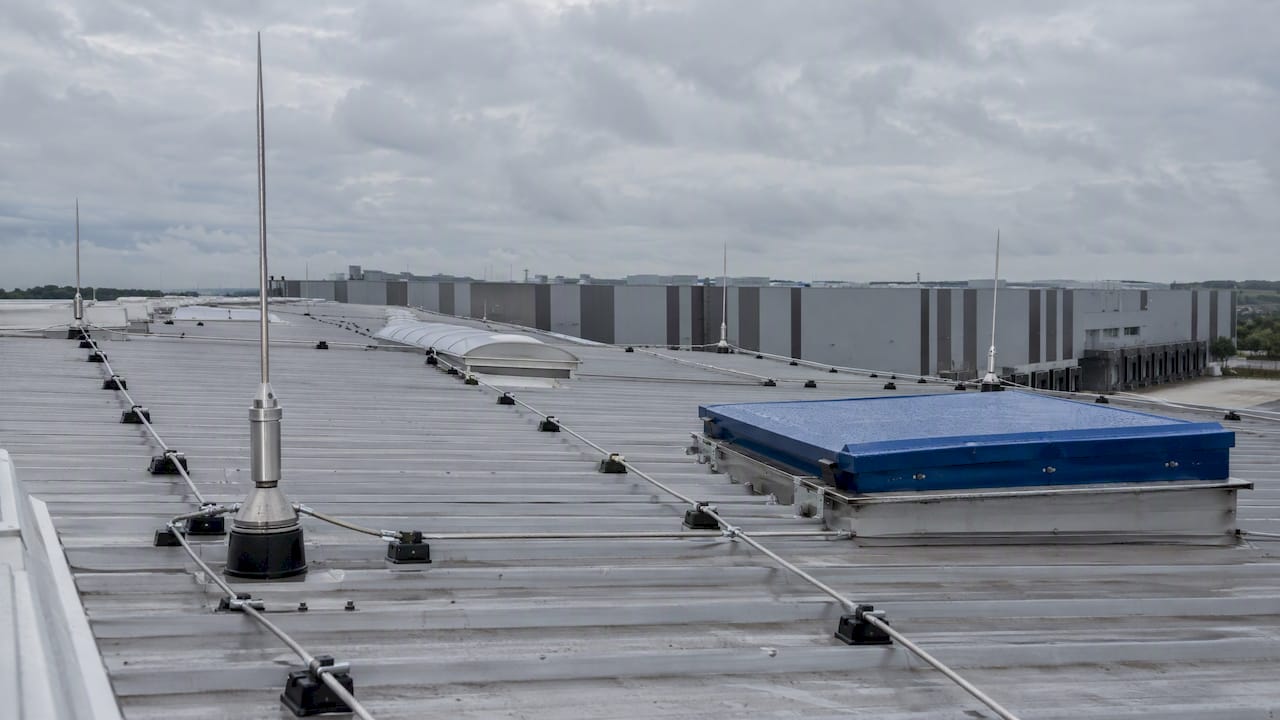
A logistics warehouse in France needs lightning protection when a risk analysis says so, and in many cases the law decides before you do. If the site is a classified installation (ICPE) covered by the Arrêté of October 4, 2010, the operator must commission a lightning risk analysis (ARF) and a technical study, then install, verify and maintain the protection they specify. Even outside ICPE status, a large metal-clad building full of stock, racking, conveyors, sorting software and rooftop equipment is exposed in ways that a few surge protectors will not cover. This guide explains what the rules require, how the analysis works, what a complete system contains and how often it must be checked.
TL;DR
- For ICPE warehouses, the ARF and technical study are regulatory duties, carried out by a competent body recognized by an independent certifier.
- A complete system combines external protection (air terminals, down conductors, earthing), equipotential bonding and surge protection on power and data lines.
- Verification is due within six months of installation, then a visual check every year and a full check every two years, plus a visual check within one month after a confirmed strike.
- Roof equipment, photovoltaic arrays, stored materials and incoming services change the design, so the protection scheme cannot be copied from another site.
- Start with the risk analysis: it tells you what to build, and it is the document inspectors and insurers will ask for.
Table of Contents
- Why a warehouse is exposed
- What French rules require
- How the lightning risk analysis works
- What a complete warehouse system includes
- Inspection and maintenance schedule
- Design mistakes we see on logistics sites
- Our perspective
- Getting a compliant system from one provider
- FAQ
- Sources
Why a warehouse is exposed
A modern logistics building is a large, flat, often metal-framed volume sitting in open land near a motorway or an industrial estate. It is usually the tallest object around, which makes it a natural strike point. Inside, the cost of an event goes well beyond the roof.
Three categories of consequence matter for operators:
- People. Lightning can injure through step voltage (current spreading in the ground), side flashes between conductive parts and shock-wave effects, including flying debris, as described in a port authority lightning preparedness plan. In a warehouse, forklift drivers, dock staff and people on the roof are the most exposed.
- Goods and structure. A direct strike can damage the roof, cladding and fire detection, and can ignite combustible stock.
- Operations. Surges entering through power, telecom and data cables can take down warehouse management systems, conveyors, automated storage, access control, CCTV and fire alarms. Research on industrial accidents shows that lightning can also trigger cascading technological events, for example by disrupting auxiliary utility systems, which is why the scope of protection cannot stop at the roof.
The second and third categories are where most of the money is lost. A building can survive a strike with minimal visible damage and still be stopped for days because controllers, drives and network switches failed.
What French rules require
There are two layers: environmental regulation for classified sites, and electrical installation standards that apply more widely.
ICPE warehouses: the Arrêté of October 4, 2010
For listed ICPE installations where a lightning strike could cause an event harming the interests protected by Article L. 511-1 of the Environment Code, the Arrêté of October 4, 2010 requires an ARF, a technical study, protection measures, and then verification and maintenance. The text as amended is available through Légifrance.
The Arrêté of February 28, 2022 extended these lightning provisions to specified 3000-series ICPEs. For specified existing installations, ARFs apply from September 1, 2024 and Articles 19 to 22 from September 1, 2026. That second date has now passed, so if your site falls in this group and has no analysis or no implemented measures, you are already in the zone where an inspection can raise the matter.
Whether your warehouse is classified at all depends on what you store and in what quantity. Your operating permit, or the prefecture’s file on your site, is the authority. If you are unsure, ask your environmental consultant to confirm the rubric before anything else.

Surge protection: NF C 15-100
Independently of ICPE status, standard NF C 15-100-1, applicable since August 2024, defines when to install surge protectors and how to select and implement them in new, modified or extended low-voltage installations, according to an industry technical resource. The same source notes that certain ICPEs also carry specific requirements for an ARF, a technical study and periodic checks.
In practice, a warehouse that is extended, refitted or fitted with a new electrical distribution board should treat surge protection as part of the design, not as an option added after a first loss.
Who may carry out the work
The ARF, the technical study and the checks must be performed by “competent bodies” recognized by an independent certifying body, against a repository approved by the Ministry of Environment, according to the 2022 Arrêté. When you select a provider, ask for the proof of that recognition and check its scope covers the task you are ordering. For more detail on how these obligations apply to classified sites, see our ICPE lightning protection compliance guide, and our page on lightning standards.
How the lightning risk analysis works
The ARF is the starting point because it replaces assumptions with a calculation. It is carried out by a competent body, based on NF EN 62305-2 or a technical guide recognized by the minister, to identify which installations need protection and at what protection level, per the Arrêté as amended in 2011.
In a warehouse, the inputs that move the result are concrete:
- Dimensions and local lightning density. A large footprint collects more strikes. Local flash density varies a lot across France.
- Incoming lines. Power supply, telecom, data and any remote-monitoring links are paths for surges.
- What is inside. Valuable stock, automation, and zones holding flammable or explosive materials raise the consequences.
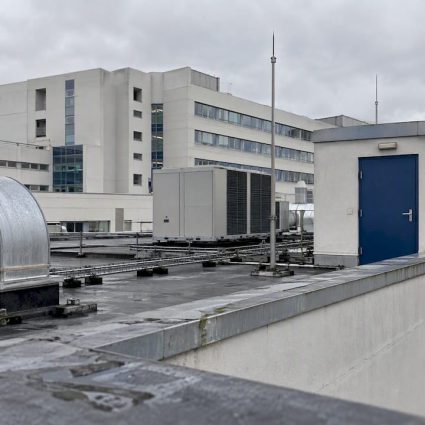
- What is on the roof. Skylights, smoke vents, HVAC units, antennas and solar arrays alter the geometry of the protection.
These factors are listed in French guidance on lightning regulations. Photovoltaic production units are explicitly within the scope of the lightning risk analysis where applicable under the 2022 Arrêté. Since many logistics roofs now carry solar, you should declare any array, existing or planned, at the first meeting with the analyst.
When the analysis must be updated
The ARF is updated after substantial modifications, a revision of the hazard study, or changes affecting its input data. For a logistics operator this has a practical meaning: a new mezzanine, a building extension, a change of stored product category or a new rooftop installation should trigger a conversation with your lightning consultant before works start, not after.
From analysis to works: the two-year window
A competent body implements the measures and devices defined in the technical study no later than two years after the ARF. Installations authorized from August 24, 2008 must have them in place before operation. Plan the budget on that basis: the analysis is not a document to file, it starts a clock.
Our guides on lightning risk assessment and why assessing infrastructure risk pays off walk through the logic for decision-makers.
What a complete warehouse system includes
The technical study specifies direct protection, including the type and position of capture devices, down conductors and earth electrodes, then equipotential bonding, then surge protection for power and communication lines. This structure comes from the circulaire of April 24, 2008 published through the INERIS regulatory database. Each element has a role.

External protection: capturing the strike
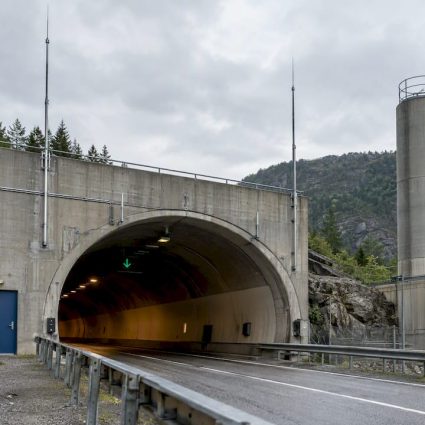
The air termination intercepts the strike. On a warehouse, the common choices are a meshed cage across the roof, or air terminals on masts. Early streamer emission (ESE) terminals are designed under NF C 17-102, which specifies requirements for designing ESE systems for structures and open areas. Which approach suits a given roof depends on the protection level set by the ARF and on the roof’s obstacles.
We supply both families: lightning rods, including the Prevectron3 air terminal, as well as masts, mast fixings and meshed cage components.
Down conductors and earthing
Down conductors carry the current from the roof to the ground. On a long, low building, the number and spacing of descents, and the way they are routed along the cladding, matter as much as the terminal. Connections are a frequent weak point, which is why we published a site guide to down conductor connections. Our range of down conductors covers the fixings and components.
The earthing system then disperses the current. Warehouses on poor or rocky soil, or with large slabs and extensive steel, often need a specific design. Our earthing products and deep earth grounding drilling service address sites where surface electrodes will not reach a low enough resistance.
Equipotential bonding
Bonding connects metallic masses (racking, rails, cable trays, sprinkler piping, the building frame) to a common reference, so that a strike does not create dangerous voltage differences between them. This is the step that protects people at the dock and on the floor, and it is frequently underestimated on retrofits.
Surge protection on power and data
Surge protective devices (SPDs) limit transient overvoltages arriving on cables. Industry body GIMELEC states that surge protectors protect electrical installations and equipment and can help limit service interruptions and operational losses. For a distribution or e-commerce hub where a stopped sorter costs by the hour, that is the argument that decides.
Two practical points:
- SPDs should cover every conductive entry path: power, telecom, data, and any cables running to outbuildings, gates or yard lighting.
- A surge protector alone does not replace external protection against a direct strike on the structure. The two address different parts of the problem.
See our surge protection range and low voltage surge protection cabinets.
A quick view of the roles
| Element | What it does | Typical warehouse concern |
|---|---|---|
| Air terminals or meshed cage | Intercept the direct strike | Large roof, rooftop equipment, solar arrays |
| Down conductors | Carry current to ground | Routing along cladding, connections |
| Earthing | Disperses current into the soil | Soil resistivity, large slab |
| Equipotential bonding | Prevents dangerous voltage differences | Racking, piping, cable trays |
| Surge protection | Limits transients on cables | Automation, WMS, fire and security systems |
Inspection and maintenance schedule
The Arrêté sets a clear rhythm. Protection systems must undergo a full initial verification within six months of installation. Visual checks follow annually, and complete inspections every two years by a competent body, distinct from the installer. A visual check is mandatory within one month after a confirmed lightning strike, and any defects found must be repaired within one month. All of this comes from Article 21 as amended.
What that means for a facility manager:
- Keep a log. Record every inspection, defect, repair and each confirmed strike.
- Detect strikes. A lightning strike counter on a down conductor gives objective evidence that a strike occurred, which triggers the one-month check.
- Separate roles. The party verifying must not be the installer, so build two distinct contracts into your procurement.
- Watch surge devices. SPDs wear out. Indicator status should be part of the annual visual round.
Our grounding maintenance guide and our note on why regular maintenance matters for facility managers go into the routine.
Design mistakes we see on logistics sites
- Treating a building extension as an annex. The new bay is outside the old study, and the old protection no longer fits the geometry.
- Adding solar without updating the analysis. Panels, cabling and inverters create new paths and new exposed equipment.
- Surge protection at the main board only. Remote cabins, dock doors, gatehouses and yard lighting need their own protection.
- Ignoring soil. A system that looks perfect on paper fails if the earthing resistance is not achieved and kept.
- Skipping the post-strike check. The one-month visual check is a duty, not a courtesy.
Our perspective
Warehouses are among the building types where lightning protection is most often under-specified, because the structure looks simple: a big box with a flat roof. The complexity lies in what the box contains and what enters it. We have always approached these projects as a chain: analysis, study, installation, verification and maintenance, with each link documented so that the next one holds.
Our view is that the analysis should drive the budget, and that the cheapest moment to protect a warehouse is at design or extension stage, when down conductors can follow the structure and earthing can be laid in the foundations. On existing sites, a phased approach works: start with the analysis, secure the electrical entry points where downtime costs most, then complete the external system within the regulatory window.
With more than 280,000 installations behind us and an R&D center that works on how standards and climate conditions evolve, we favor solutions tailored to the building rather than a catalogue package.
— INDELEC
Getting a compliant system from one provider
If you manage a logistics site, or build one for a client, we can take the project from the lightning risk analysis and technical study through installation, verification and maintenance. Our lightning protection services cover each of those stages, and our product ranges supply the hardware.

To scope your site, contact our team through the services page with the building plan, the ICPE status if any, and the list of rooftop equipment.
FAQ
Is lightning protection mandatory for every logistics warehouse in France?
Not automatically. It becomes mandatory when the site is a listed ICPE falling under the lightning provisions of the Arrêté of October 4, 2010, or when other rules and standards apply, such as NF C 15-100-1 for surge protection in new or modified installations. For other buildings, a risk analysis tells you whether protection is justified, and your insurer may also have requirements.
Who can perform the lightning risk analysis for an ICPE warehouse?
A competent body recognized by an independent certifying body, according to a repository approved by the Ministry of Environment. The verification body must also be distinct from the installer. Ask any provider for proof of its recognition before signing.
How often must the lightning protection be inspected?
A full verification is due within six months of installation. After that, expect a visual check every year and a complete check by a competent body every two years. A visual check is also due within one month of a confirmed strike, and defects must be repaired within one month.
Are surge protectors enough for a warehouse?
No. Surge protectors limit transients coming in through cables, but they do not intercept a strike on the structure. A full scheme combines external protection, earthing, equipotential bonding and surge protection, sized according to the risk analysis.
Do solar panels on the roof change the lightning protection?
Yes. The 2022 Arrêté explicitly includes photovoltaic production units in the scope of the risk analysis where applicable, and arrays change the layout of air terminals, conductors and surge protection. Tell your analyst about any existing or planned installation.
Sources
- Arrêté of July 19, 2011 amending the Arrêté of October 4, 2010 (Légifrance)
- Arrêté of February 28, 2022 (Légifrance)
- Standards, obligations and regulation for industry (DEHN France)
- Circulaire of April 24, 2008 (INERIS AIDA)
- French lightning regulations (ADEE)
- GIMELEC, protect your buildings against lightning, March 2026
- NF C 17-102, September 2011
- NaTech triggered by lightning (PubMed Central)
- Lightning preparedness and response plan (Pilbara Ports)