Protection for Railway Systems: A 2026 Operator’s Guide

TL;DR:
- Protection for railway systems involves layered safety measures, including train control, physical barriers, and cybersecurity. These systems work together to prevent accidents caused by human error, unauthorized access, or cyberattacks, with ongoing maintenance and procedural audits sustaining their effectiveness. Gaps remain in electrical infrastructure protection and lifecycle management, which are crucial for ensuring long-term safety and system reliability.
Protection for railway systems is the integrated set of technologies, physical safeguards, and safety management practices that prevent accidents, unauthorized access, and infrastructure failures across rail networks. The industry term for the core technical layer is train protection, which covers systems like Automatic Train Protection (ATP) and India’s Kavach. Beyond train control, railway safety measures span physical barriers, cybersecurity frameworks such as IEC 63452, and procedural standards including EN 50129. Each layer addresses a distinct failure mode. Together, they form the complete picture of what protects railway infrastructure from hazards that range from human error to cyberattack.
What is protection for railway systems and how does it work?
Protection for railway systems operates across three interdependent layers: automated train control, physical infrastructure defense, and cyber-physical governance. No single layer is sufficient on its own. A train protection system can prevent a collision, but it cannot stop an intruder from cutting a cable. A fence stops trespassers, but it does not protect signaling software from a remote exploit. Railway system protection methods work because they address each failure mode with a dedicated countermeasure, then integrate those countermeasures under a unified safety management program.
The importance of railway protection becomes clear when you examine what happens when one layer fails. The 2023 Odisha train collision in India, which involved three trains and over 290 fatalities, exposed gaps in both signaling logic and operational oversight. That event accelerated India’s deployment of Kavach and the Indian Railway Board’s 2026 mandate for monthly signaling audits. Protection is not a static checklist. It is a living program that responds to real incidents with measurable upgrades.
How do train protection systems prevent accidents?
Automatic Train Protection is the technology that monitors train speed, enforces signal compliance, and applies emergency brakes when a driver fails to respond. ATP systems remove human error from the most critical decision point in rail operations: stopping before a red signal or a speed restriction. Without ATP, a fatigued or distracted driver is the last line of defense.
India’s Kavach system is the most discussed ATP deployment of 2026. Indian Railways approved Kavach across 631 route kilometers at a cost of Rs 270 crore, covering six East Coast Railway sections that include fog-prone corridors. That deployment scale demonstrates how a single national program can address both collision risk and adverse weather operations simultaneously.
The table below compares the major train protection technologies currently in active deployment.
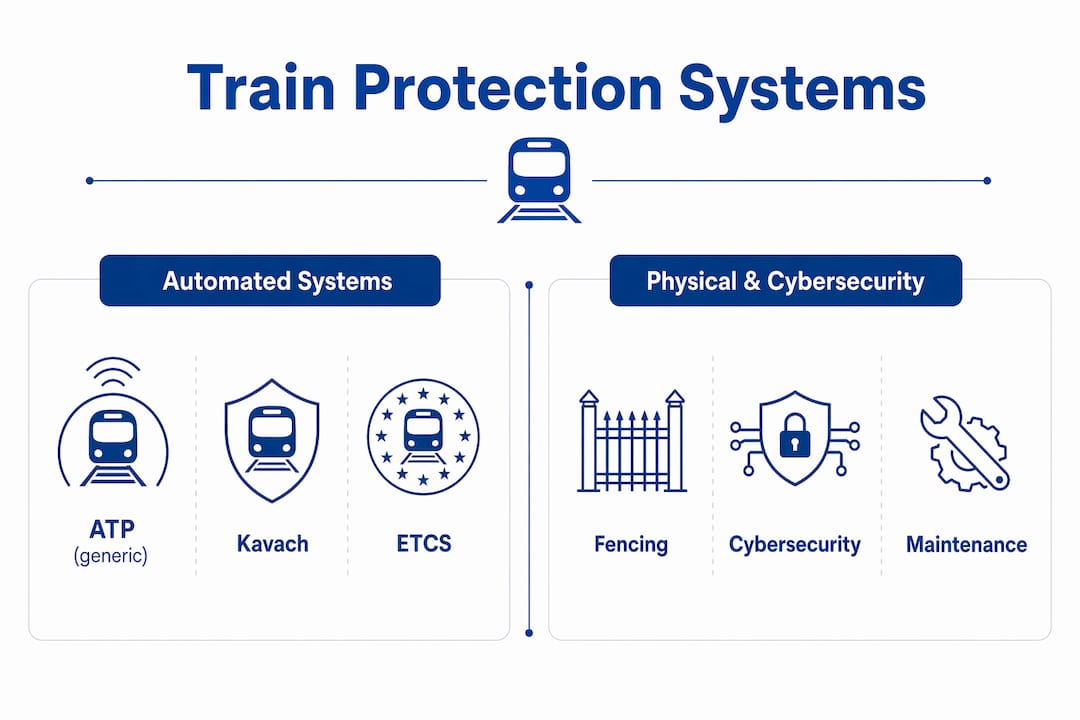
| System | Primary function | Key feature |
|---|---|---|
| ATP (generic) | Speed and signal enforcement | Automatic brake application |
| Kavach (India) | Collision avoidance | Works in dense fog; indigenous design |
| ETCS Level 2 (Europe) | Continuous train supervision | Radio-based, no lineside signals needed |
| TPWS (UK) | Overspeed and signal protection | Retrofit-compatible with legacy track |
Each system targets the same core risk: a train moving where it should not. The difference lies in how they communicate with infrastructure and how they handle legacy track equipment.
Pro Tip:When evaluating ATP upgrades, prioritize systems that integrate with existing interlocking hardware before replacing it. Kavach’s design philosophy of working alongside legacy signaling, rather than replacing it outright, cut deployment costs significantly on the East Coast Railway corridors.
The collision avoidance function in modern train protection systems uses radio-based communication between locomotives and trackside units. When two trains approach the same block, the system calculates closing speed and triggers braking on the trailing train automatically. Speed monitoring adds a second layer by comparing real-time velocity against the permitted speed profile for each track section.
What physical protection methods defend railway infrastructure?
Physical railway security systems are the first line of defense against trespassing, cattle incursions, and sabotage. Fencing is the most widely deployed physical measure. Indian Railways fenced 16,398 km of track to reduce trespassing and cattle-related incidents, with priority given to routes operating above 110 kmph. That prioritization reflects a clear risk calculus: higher speeds leave less time for emergency braking, so physical exclusion matters more.
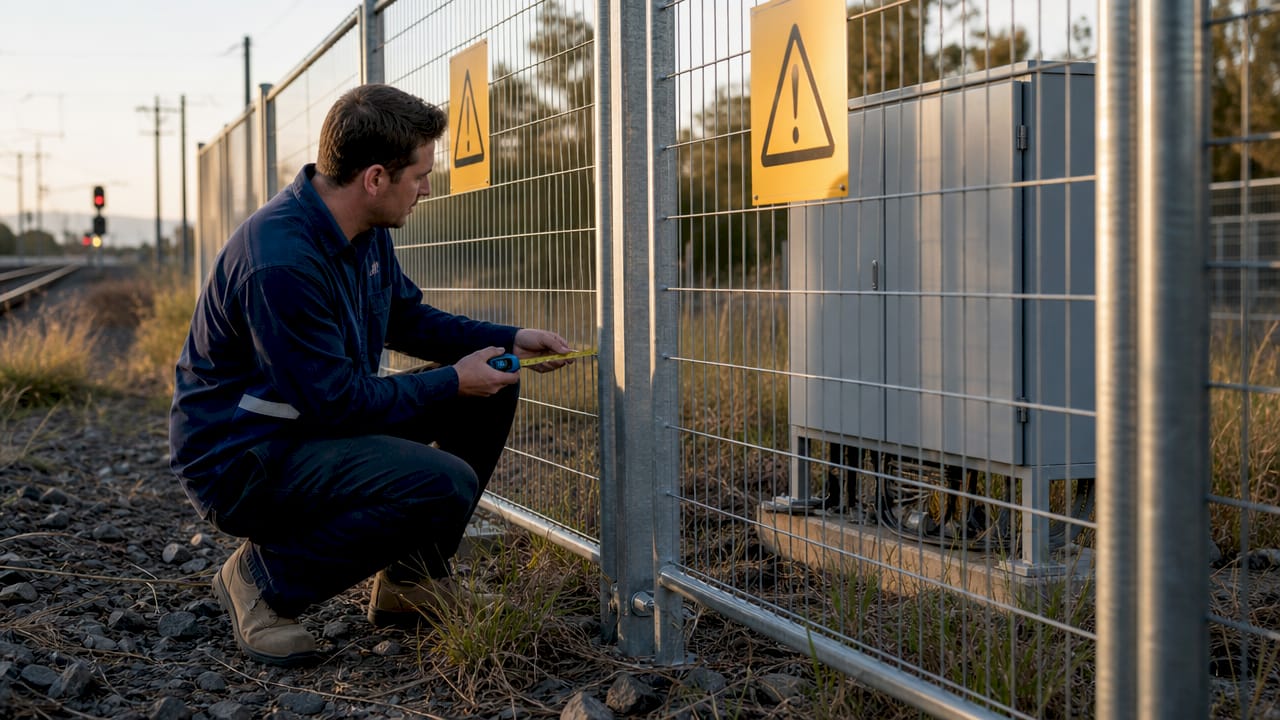
Fencing alone does not solve the pedestrian crossing problem. On the Lonavala-Pune-Daund route, Indian Railways built pedestrian subways at a cost of Rs 209.38 crore to provide safe crossing points without interrupting train operations. Subways eliminate the grade crossing risk entirely, which fencing cannot do on its own. The combination of continuous fencing and grade-separated crossings represents the current best practice for high-speed corridors.
Physical protection for railway infrastructure also includes:
- Perimeter fencing on high-speed corridors to prevent human and animal incursions
- Pedestrian subways and footbridges at crossing points to eliminate grade-level conflicts
- Electrical grounding systems that protect trackside equipment from lightning and fault currents
- Surveillance systems including CCTV at stations, yards, and critical infrastructure nodes
- Access control at relay rooms, substations, and control centers
Physical protections like fencing remain vital frontline defenses against accidental incursions. Their effectiveness depends on consistent maintenance and integration with monitoring systems that detect breaches in real time.
Railway cybersecurity: What are the unique challenges in 2026?
Rail cybersecurity is a distinct discipline, not a subset of standard IT security. Alstom identifies electromagnetic interference from high-voltage traction systems as a core hardware challenge that standard enterprise security tools are not designed to handle. Signaling systems must operate in real time with zero tolerance for latency. A firewall that introduces a 200-millisecond delay in an enterprise network is acceptable. The same delay in a train control system is a safety event.
Rail cybersecurity research shows a fragmented landscape where over half of studies focus on control system security but only 7% address awareness and training. That gap matters because the most common entry point for rail cyberattacks is not a software vulnerability. It is an operator who clicks a phishing link or connects an unauthorized device to a maintenance laptop. Technical defenses without trained personnel are incomplete.
The IEC 63452 standard addresses this by requiring continuous monitoring that does not interfere with safety-critical systems. Claroty recommends a programmatic approach that integrates people, processes, and technology rather than treating cybersecurity as an isolated IT function. That shift from reactive patching to continuous, risk-based governance is the defining change in railway security systems for 2026.
Pro Tip:Deploy passive network monitoring tools on operational technology networks before active scanning tools. Passive monitoring collects traffic data without sending packets that could disrupt signaling protocols. This aligns with IEC 63452 requirements and avoids the risk of triggering safety-critical responses during a security scan.
Key cybersecurity challenges specific to rail environments include:
- Electromagnetic interference from traction power systems affecting hardware reliability
- Legacy signaling protocols not designed with network security in mind
- Real-time operation constraints that limit the use of standard security tools
- Fragmented standards across national rail operators and equipment vendors
- Low investment in awareness and training, covering only 7% of current research focus
The EU Cyber Resilience Act now enforces lifecycle security responsibilities for digital products including rail systems. That regulation pushes cybersecurity from a procurement checkbox to an engineering requirement that spans design, operation, and decommissioning.
How do maintenance and procedural safeguards sustain railway protection?
Procedural safeguards are the layer that keeps technical systems functioning as designed. Hardware degrades. Software drifts. Without structured audits and documentation, a protection system that passed certification three years ago may no longer meet its original safety integrity level.
The Indian Railway Board addressed this directly in 2026. Monthly signaling audits by senior officers became mandatory starting april 2026, covering equipment condition, wiring integrity, and earthing quality across both new and existing installations. Full documentation is required for each audit. That documentation trail creates accountability and enables trend analysis across audit cycles.
The EN 50129 standard formalizes the documentation requirement at the hardware level. EN 50129 requires a formal Safety Case for every signaling hardware platform, demonstrating compliance with Safety Integrity Levels through quantitative analysis. Meeting EN 50129 is not a one-time certification event. It is an ongoing obligation that requires hardware platforms to be re-evaluated when components change or operating conditions shift.
A complete procedural safeguards program includes these steps:
- Baseline safety audit covering all signaling, earthing, and wiring installations before any new system goes live
- Monthly field inspections by qualified senior officers, with written findings and corrective action timelines
- Safety Case documentation under EN 50129 for all electronic hardware in signaling service
- Risk register updates after every incident, near-miss, or audit finding that reveals a new failure mode
- Passive monitoring review of operational technology networks to detect anomalies without disrupting train control
Pro Tip:Treat the Safety Case as a living document, not a certification artifact. Update it whenever hardware is modified, software is patched, or operating parameters change. EN 50129 compliance depends on the Safety Case reflecting the current state of the system, not its state at initial deployment.
The UK’s Safer Railway Scheme adds a governance layer above individual operator programs. The scheme provides a national accreditation framework led by British Transport Police, covering security, suicide prevention, and violence against women and girls, with accreditation valid for two years and ongoing improvement required. That two-year cycle forces operators to demonstrate continuous progress rather than point-in-time compliance.
Key Takeaways
Effective protection for railway systems requires simultaneous investment in train control technology, physical barriers, cybersecurity governance, and structured maintenance programs.
| Point | Details |
|---|---|
| Train protection is the technical core | ATP systems like Kavach enforce speed limits and prevent collisions by removing human error from critical decisions. |
| Physical barriers address access risks | Fencing and grade-separated crossings on high-speed corridors reduce trespassing and cattle incursion incidents. |
| Cybersecurity requires a rail-specific model | IEC 63452 and programmatic governance address constraints that standard IT security tools cannot handle. |
| Procedural audits sustain system integrity | Monthly signaling audits and EN 50129 Safety Cases prevent certified systems from degrading over time. |
| Integration across layers is non-negotiable | No single protection measure covers all failure modes; gaps between layers are where incidents occur. |
Indelec’s perspective on railway protection gaps
The most consistent gap Indelec observes across railway protection programs is not in train control technology. Operators invest heavily in ATP and signaling. The gap is in electrical infrastructure protection, specifically lightning and fault current management for trackside equipment.
A Kavach transponder or a relay room full of certified EN 50129 hardware can be destroyed by a single direct lightning strike or a ground fault that was not properly managed. Grounding systems and lightning protection for electrical infrastructure are rarely included in the same planning conversation as train protection systems. They should be. Every piece of trackside electronics depends on a properly designed grounding network to survive both lightning events and the electromagnetic environment created by traction power.
The second gap is lifecycle thinking. Operators certify hardware, deploy it, and then treat the protection layer as complete. Lightning risk changes as climate patterns shift. A protection zone that was adequate in 2015 may not cover the same equipment in 2026. Indelec’s experience across industrial and infrastructure sectors shows that protection programs which do not include periodic re-evaluation of electrical hazard exposure will eventually face a failure that the original design did not anticipate.
The recommendation is straightforward: include electrical grounding and lightning protection in the initial railway safety case, not as an afterthought. Treat it with the same rigor applied to signaling hardware under EN 50129. The investment is small relative to the cost of replacing destroyed electronics or investigating a service disruption caused by a lightning-induced fault.
— Indelec
Indelec’s lightning and grounding solutions for railway infrastructure
Railway infrastructure concentrates high-value electronics in exposed outdoor environments. Trackside cabinets, relay rooms, and communication towers face direct lightning risk on every route kilometer.

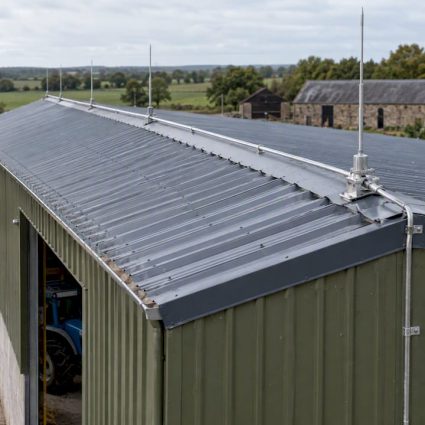
Indelec has protected critical infrastructure since 1955, with solutions specifically designed for environments where electrical reliability is a safety requirement. The Prevectron3 lightning rod uses Indelec’s patented OptiMax technology to provide early streamer emission protection for large, complex sites including railway installations. For grounding, Indelec’s deep earth grounding drilling service establishes low-impedance ground connections in difficult soil conditions common along railway corridors. Both solutions integrate with existing railway safety infrastructure and support compliance with applicable lightning protection standards.
FAQ
What is the main purpose of train protection systems?
Train protection systems prevent collisions and overspeeding by automatically enforcing signal compliance and applying emergency brakes when a driver fails to respond. Systems like ATP and Kavach remove human error from the most critical safety decisions in rail operations.
How does IEC 63452 apply to railway cybersecurity?
IEC 63452 sets requirements for continuous monitoring of railway operational technology networks in a way that does not interfere with safety-critical signaling systems. It supports the programmatic, risk-based governance approach that Claroty and other specialists recommend for rail cyber-physical security.
Why is fencing prioritized on high-speed railway corridors?
Higher operating speeds reduce the time available for emergency braking, making physical exclusion of trespassers and animals more critical. Indian Railways prioritized fencing on routes exceeding 110 kmph for exactly this reason, completing 16,398 km of track fencing.
What does EN 50129 require from railway operators?
EN 50129 requires a formal Safety Case for every electronic hardware platform used in railway signaling, demonstrating compliance with Safety Integrity Levels through quantitative analysis. The Safety Case must reflect the current state of the system and be updated when hardware or operating conditions change.
Does lightning protection count as a railway safety measure?
Lightning protection is a direct railway safety measure because a strike to trackside electronics can disable signaling systems, destroy ATP hardware, and cause service disruptions. Grounding systems and lightning rods protect the electrical infrastructure that all other railway protection systems depend on.