Identify and manage common lightning hazards in facilities
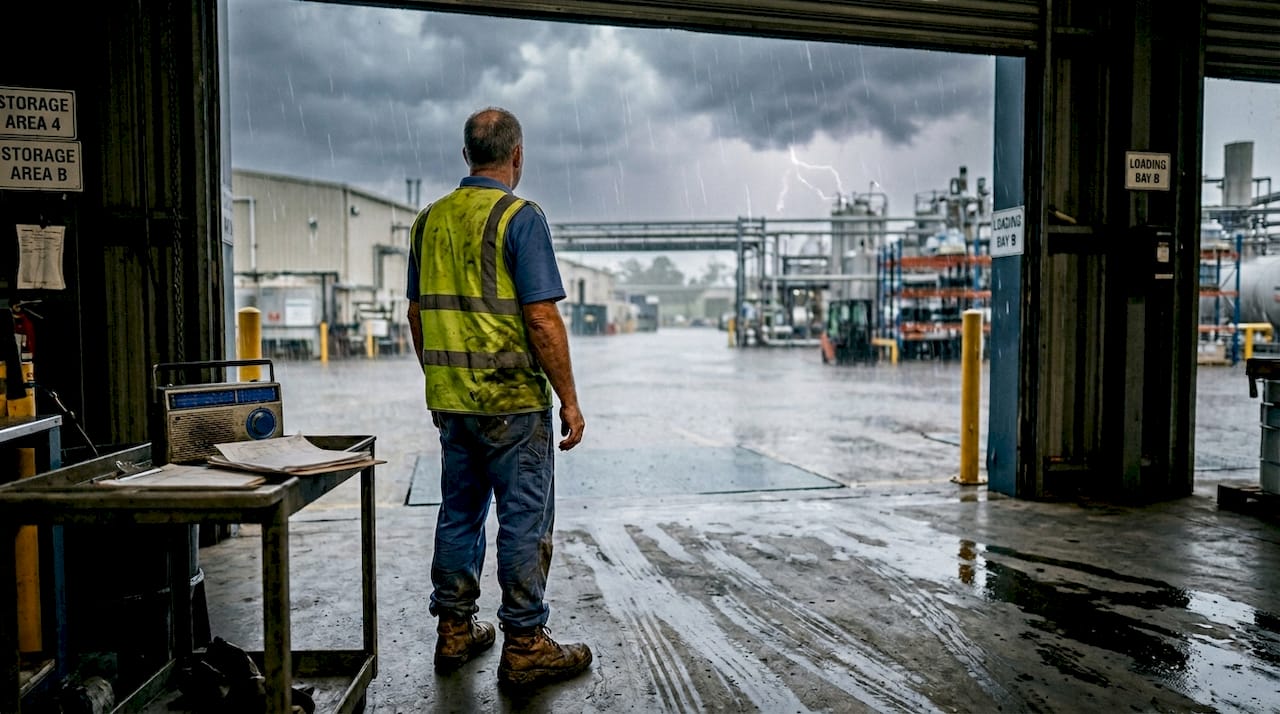
Industrial facilities face significant risks from lightning strikes each year, with direct and indirect lightning hazards causing extensive damage to operations, equipment, and personnel safety. Understanding these hazards is the first critical step in developing effective protection strategies that safeguard your infrastructure and ensure regulatory compliance. This guide explores the most common lightning hazards threatening industrial sites, explains how to assess your facility’s unique risk profile, and provides actionable mitigation strategies aligned with NFPA and IEC standards to protect your operations from costly disruptions.
Table of Contents
- Key takeaways
- Common types of lightning hazards in industrial facilities
- Evaluating lightning risk and standards for protection
- Mitigation strategies for common lightning hazards
- Comparison of lightning protection approaches and practical considerations
- Explore lightning protection solutions from Indelec
- What are the most common lightning hazards in industrial facilities?
- How can facility managers effectively assess their lightning risk?
- What mitigation measures are essential for compliance and safety?
- Do Early Streamer Emission rods provide better protection than traditional lightning rods?
- How often should lightning protection systems be inspected and maintained?
Key Takeaways
| Point | Details |
|---|---|
| Direct strikes risk | Direct lightning strikes cause structural fires and physical damage to industrial facilities, especially tall structures and petrochemical plants. |
| Indirect hazards disruption | Electromagnetic pulses and ground potential rise from nearby lightning disrupt operations and damage electronics across control systems. |
| Risk assessment framework | Risk assessment uses NFPA 780 and IEC 62305 to estimate strikes, consequences, and losses for informed protection decisions. |
| Protection and mitigation | Mitigation combines lightning protection systems, surge protection, grounding, and bonding to reduce risk. |
Common types of lightning hazards in industrial facilities
Industrial sites encounter several distinct lightning hazard categories, each presenting unique threats to operations and safety. Direct lightning strikes cause structural fires, explosions, and physical damage to industrial facilities, particularly affecting tall structures, elevated equipment, and petrochemical plants where ignition sources meet flammable materials. These strikes deliver massive electrical energy directly to structures, often exceeding 200,000 amperes in peak current.
Indirect hazards frequently cause more widespread operational disruption than direct strikes. Electromagnetic pulses (EMP) generated by nearby lightning create powerful magnetic fields that induce voltage spikes in electrical conductors and cable systems. Ground potential rise (GPR) occurs when lightning current disperses through soil, creating dangerous voltage gradients between grounded equipment and creating shock hazards for personnel. Voltage surges travel through power and data lines, damaging sensitive control systems, programmable logic controllers, and instrumentation.
Floating roof tank fires represent a specialized hazard in oil and gas facilities. Lightning-induced sparks at the seal between the floating roof and tank wall can ignite vapor spaces, causing catastrophic fires. These incidents highlight why lightning protection system application requires industry-specific expertise.
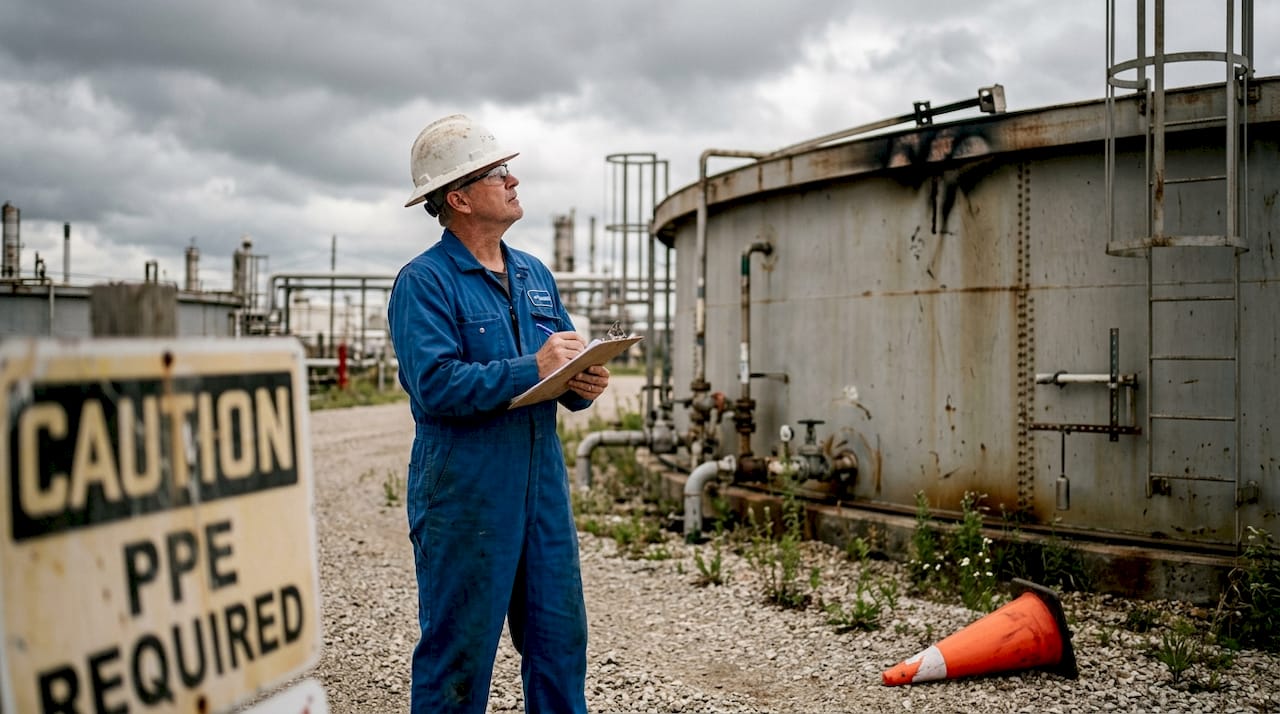
The financial impact of indirect effects often exceeds direct damage costs. A single surge event can disable multiple control systems simultaneously, halting production for days while replacement components arrive and systems undergo recalibration. Understanding these hazard types allows you to prioritize protection investments where they deliver maximum risk reduction.
Pro Tip: Map your facility’s electrical and data pathways to identify surge entry points. This visualization reveals vulnerable systems requiring surge protection devices before lightning season peaks.
Evaluating lightning risk and standards for protection
Effective lightning protection begins with systematic risk assessment using established frameworks. NFPA 780 and IEC 62305 provide different approaches to evaluating and mitigating lightning hazards, with NFPA offering prescriptive design requirements while IEC mandates calculated risk assessment.
Risk assessment involves three core calculations. First, estimate the number of expected strikes (N) based on facility dimensions, height, and local ground flash density. Second, calculate probability (P) that a strike will cause specific consequences like fire, equipment failure, or injury. Third, evaluate potential loss (L) considering human safety, service continuity, cultural heritage, and economic impact. Multiplying these factors (Risk = N × P × L) produces quantifiable risk values you compare against tolerable thresholds.
NFPA 780 provides prescriptive requirements for lightning protection system (LPS) design in the United States. The standard specifies air terminal placement using rolling sphere, mesh, or angle of protection methods. Down conductors must follow defined spacing and routing requirements. Grounding systems require specific electrode configurations and resistance values. This prescriptive approach simplifies compliance but may not optimize protection for every facility configuration.
IEC 62305 takes a risk-based approach mandatory in many international jurisdictions. You must calculate risk values using standard formulas, then select appropriate Lightning Protection Levels (LPL I through IV) based on tolerable risk thresholds. LPL I provides highest protection for critical facilities, while LPL IV offers basic protection for standard structures. This method allows balancing lightning safety and cost through data-driven decisions.
OSHA regulations require employers to protect workers from electrical hazards including lightning. While OSHA doesn’t prescribe specific lightning protection system designs, facilities must demonstrate adequate safeguards for personnel safety. Compliance typically involves following NFPA or IEC standards as recognized best practices.
Risk assessment delivers multiple benefits beyond regulatory compliance:
- Identifies highest-risk areas requiring immediate protection investment
- Justifies protection system expenditures with quantified risk reduction
- Optimizes resource allocation across multiple facility locations
- Documents due diligence for insurance and liability purposes
- Guides maintenance priorities for existing protection systems
Engaging qualified lightning protection professionals ensures assessments account for site-specific factors like soil conditions, nearby structures, and operational requirements. Their expertise becomes particularly valuable for highly sensitive installation solutions where protection failures carry severe consequences.
With risk assessment frameworks established, you can now implement targeted mitigation strategies addressing your facility’s specific vulnerabilities.
Mitigation strategies for common lightning hazards
Comprehensive lightning protection systems, surge protection devices, equipotential bonding, and grounding are essential for mitigation of lightning hazards in industrial facilities. Effective protection requires multiple defensive layers working together to intercept strikes, safely conduct current to ground, and prevent voltage differentials that damage equipment or endanger personnel.
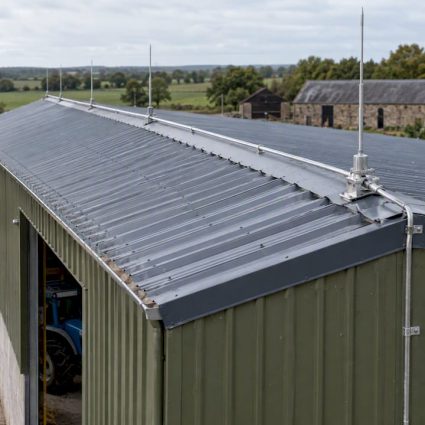
Installing a complete Lightning Protection System (LPS) forms your primary defense against direct strikes. Air terminals (lightning rods) positioned according to NFPA or IEC guidelines intercept strikes before they contact critical structures. Down conductors provide multiple low-impedance paths routing current from air terminals to ground. Proper conductor sizing, spacing, and routing prevent dangerous side flashing to building components. Ground electrodes disperse current into earth through sufficient contact area, with configuration depending on soil resistivity measurements.
Surge Protection Devices (SPDs) shield sensitive electronics from voltage spikes entering through power and data lines. Install SPDs at service entrance panels to block surges from utility lines. Additional SPDs at distribution panels and individual equipment provide coordinated protection stages, with each stage clamping progressively lower voltage levels. Select SPD ratings based on expected surge magnitudes and equipment sensitivity thresholds. Replace SPDs after significant surge events, as internal components degrade with each activation.
Equipotential bonding eliminates dangerous voltage differences between conductive systems during lightning events. Bond all metal structures, piping, cable shields, and equipment frames to the lightning protection system and facility grounding. This creates a common reference potential, preventing current flow between bonded elements that could spark fires or damage equipment. Pay special attention to bonding requirements in hazardous locations where even small sparks risk ignition.
Conducting site-specific risk assessment tailors protection measures to your facility’s unique characteristics. Factors like building height, contents value, occupancy patterns, and consequence of failure determine appropriate protection levels. A sensitive site protection example demonstrates how customized designs address specialized requirements beyond standard approaches.
Regular maintenance preserves protection system integrity over time. Annual inspections verify air terminal condition, conductor connections, ground electrode resistance, and SPD functionality. Corrosion, mechanical damage, and loose connections compromise protection effectiveness. Document inspection results and promptly repair identified deficiencies. After nearby lightning strikes, conduct expedited inspections even if no obvious damage appears, as hidden conductor breaks or SPD degradation may have occurred.
Pro Tip: Test ground resistance annually during dry conditions when soil resistivity peaks. This worst-case measurement ensures your grounding system meets requirements year-round, not just during favorable wet seasons.
Implementing these mitigation strategies significantly reduces lightning risk, but selecting optimal approaches for your facility requires comparing available protection methodologies and technologies.
Comparison of lightning protection approaches and practical considerations
Choosing between lightning protection methodologies involves understanding contrasting viewpoints between NFPA 780 prescriptive methods and IEC 62305 risk-based approaches. NFPA 780 specifies installation requirements without mandatory risk calculation, making compliance straightforward but potentially over-protecting low-risk facilities or under-protecting high-consequence sites. IEC 62305 requires quantified risk assessment using formulas that calculate tolerable risk thresholds, allowing optimized protection levels but demanding more engineering analysis upfront.
| Protection Approach | Key Characteristics | Best Applications | Limitations |
|---|---|---|---|
| NFPA 780 Prescriptive | Fixed design rules, rolling sphere method, defined conductor spacing | US facilities seeking straightforward compliance, standard commercial buildings | May not optimize cost-effectiveness, limited flexibility for unique sites |
| IEC 62305 Risk-Based | Mandatory risk calculations, protection levels I-IV, consequence-driven design | International projects, high-value facilities, sites with specific risk profiles | Requires engineering expertise, more complex documentation |
| Hybrid Approach | Combines NFPA installation practices with IEC risk assessment | Facilities operating under multiple jurisdictions, comprehensive protection strategies | Potential standard conflicts requiring expert resolution |
Early Streamer Emission (ESE) technology presents another decision point for facility managers. Traditional Franklin rods rely on natural strike attachment processes, while ESE devices claim to generate upward leaders earlier, theoretically extending protection radius. Recent surveys conclude to the higher efficiency of ESE lightning rods based on field performance data, though some standards organizations remain skeptical. ESE adoption continues growing in Europe and developing markets where fewer air terminals can reduce installation costs for large facilities.
Soil resistivity profoundly influences grounding system design effectiveness. Rocky, sandy, or frozen soil exhibits high resistivity, requiring larger electrode arrays or chemical treatment to achieve target resistance values. Facilities in challenging soil conditions may need deep-driven rods, extensive horizontal conductors, or concrete-encased electrodes. Soil resistivity testing at multiple depths during design phase prevents costly redesigns during installation.
Balancing protection performance with budget constraints requires strategic prioritization. Protect highest-consequence areas first, such as control rooms, hazardous material storage, and critical process equipment. Implement basic protection for standard structures using cost-effective methods. Phase protection system installation across multiple budget cycles if necessary, but ensure each phase delivers functional protection for covered areas rather than leaving incomplete systems that provide false security.
External factors increasingly influence protection decisions. Facilities in explosive atmospheres require specialized air terminal designs preventing spark generation. Climate change correlates with increased lightning frequency in many regions, elevating risk calculations for existing facilities originally designed under lower strike density assumptions. Insurance requirements and local authority having jurisdiction (AHJ) interpretations may mandate specific approaches regardless of calculated risk levels.
Pro Tip: Request detailed soil resistivity reports from your lightning protection contractor before finalizing grounding designs. Inadequate soil data causes more project delays and cost overruns than any other factor in protection system installation.
These comparative insights and practical considerations equip you to make informed decisions about protecting your facility from lightning hazards using approaches aligned with your operational requirements and regulatory obligations.
Explore lightning protection solutions from Indelec
Protecting your industrial facility from lightning hazards requires expertise that combines technical knowledge, regulatory understanding, and practical installation experience. Indelec delivers comprehensive lightning protection system application services tailored to industrial facilities facing complex protection challenges.

Our team specializes in designing protection systems for highly sensitive sites where equipment damage or operational disruption carries severe consequences. We conduct thorough risk assessments using both NFPA and IEC methodologies, then recommend optimized protection strategies that meet your compliance requirements while balancing lightning safety and budget constraints. From initial site evaluation through installation, testing, and ongoing maintenance, Indelec provides complete lightning protection solutions backed by over 65 years of industry leadership and innovation.
What are the most common lightning hazards in industrial facilities?
Direct strikes, indirect effects, and specialized hazards like floating roof tank fires represent the primary lightning threats to industrial operations. Direct strikes deliver massive current directly to structures, causing fires, explosions, and physical damage particularly in tall buildings and petrochemical facilities. Indirect effects including electromagnetic pulses, ground potential rise, and voltage surges disrupt sensitive electronics and control systems even from distant strikes. These indirect hazards often cause greater cumulative damage than direct strikes due to their widespread impact on interconnected systems. Floating roof storage tanks face unique ignition risks when lightning-induced sparks occur at roof seals in petroleum facilities.
How can facility managers effectively assess their lightning risk?
Risk assessment involves evaluating strike frequency, probability, and potential loss according to IEC and NFPA guidelines. Calculate expected annual strikes using facility dimensions, height, and local ground flash density data. Evaluate probability that strikes will cause specific consequences like fire, equipment failure, or personnel injury. Assess potential losses considering human safety, operational continuity, and economic impact. Facility-specific factors including building height, surrounding terrain, nearby structures, and electrical equipment sensitivity significantly influence risk calculations. Engaging qualified professionals ensures comprehensive site evaluations that account for all relevant variables and produce defensible risk assessment and budgeting recommendations.
What mitigation measures are essential for compliance and safety?
Comprehensive LPS with surge protection, equipotential bonding, and grounding are essential for hazard mitigation. Install complete lightning protection systems following NFPA 780 or IEC 62305 standards, including properly positioned air terminals, adequate down conductors, and effective grounding electrodes. Deploy surge protection devices on all power and data lines serving sensitive equipment, with coordinated protection stages at service entrance, distribution, and equipment levels. Implement equipotential bonding connecting all conductive systems to prevent dangerous voltage differences during strikes. Ensure grounding system design accounts for site-specific soil resistivity through proper testing and electrode configuration. Regular inspection and maintenance preserve protection system effectiveness over time, with annual testing verifying continued compliance with lightning protection system performance requirements.
Do Early Streamer Emission rods provide better protection than traditional lightning rods?
ESE technology remains debated within the lightning protection community, with supporters citing field performance data and critics questioning theoretical mechanisms. Recent field surveys suggest ESE devices may offer protection radius advantages over traditional Franklin rods, potentially reducing required air terminal quantities for large facilities. NFPA 780 does not recognize ESE technology, while some international standards permit ESE use under specific conditions. Facilities considering ESE should evaluate local regulatory acceptance, insurance company positions, and available performance documentation. Traditional Franklin rod systems remain universally accepted and provide proven protection when designed according to established standards. Your decision should balance available evidence, regulatory requirements, and risk tolerance for your specific facility.
How often should lightning protection systems be inspected and maintained?
Annual inspections represent minimum best practice for maintaining lightning protection system integrity and ensuring continued compliance. Inspect air terminals for corrosion, mechanical damage, or displacement from original positions. Verify all conductor connections remain tight and corrosion-free, as loose connections increase impedance and create dangerous hot spots. Test ground electrode resistance to confirm values remain within specified limits, particularly after dry periods when soil resistivity peaks. Check surge protection device indicators and replace units showing end-of-life warnings. Conduct expedited inspections after nearby lightning strikes even without obvious damage, as hidden conductor breaks or component degradation may compromise protection. Document all inspection findings and promptly repair identified deficiencies to maintain system effectiveness between scheduled maintenance intervals.