Avoid a Power Upgrade: IRVE Load Shedding for Owners & Facility Teams
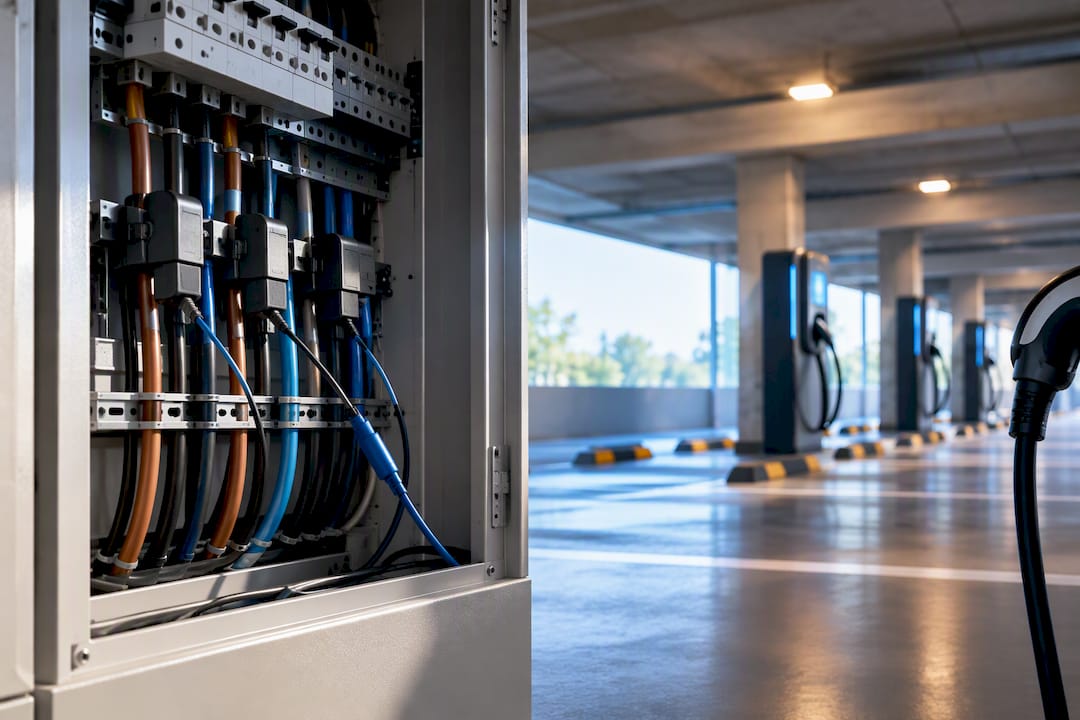
IRVE load shedding automatically reduces or pauses EV charging when a site’s power draw approaches its contracted capacity, protecting the main breaker from tripping. Dynamic load management is the better approach in almost every case: instead of a hard cutoff, it modulates charging current in real time, keeping chargers usable while avoiding the cost and delay of a power subscription upgrade.
TL;DR:
- Dynamic load management continuously measures site consumption and adjusts charging in real time, allowing more chargers to operate without exceeding the contracted power.
- Static shedding relies on fixed rules and is typically suitable only for small or low-demand sites, while dynamic management suits multi-unit buildings, workplaces, and fleet depots.
- Proper installation requires an accurate site load profile, a tailored foisonnement coefficient, and use of supervision systems that communicate via OCPP to support future expansion.
- Load shedding is triggered by nearing capacity limits, utility signals, or equipment overheating, with gradual modulation preferred over abrupt cuts to prevent secondary overloads.
- In most cases, load management hardware and software cost less over time and is preferable to a permanent power subscription upgrade, except for sites with consistently high, steady demand.
Table of Contents
- What IRVE and Load Shedding Actually Do
- Static Vs Dynamic Load Shedding: Which One Fits Your Site
- How Dynamic Load Management Works Under the Hood
- The Regulatory Baseline Every IRVE Project Must Meet
- Why Load Shedding Beats a Power Upgrade for Most Sites
- Your Installation Checklist Before Signing a Contract
- Troubleshooting Common Load Shedding Issues
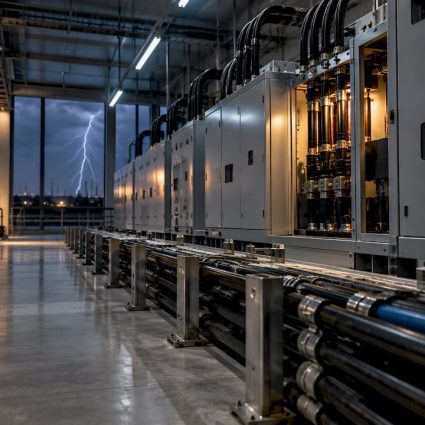
- Why Load Management and Lightning Protection Need to Be Planned Together
- What We’d Tell Homeowners, Copropriétés, and Fleet Managers
- Getting a Proper IRVE Audit Before You Install
- Where to Verify the Details Yourself
- Sources
- FAQ
What IRVE and Load Shedding Actually Do
Load shedding exists to protect your electrical panel, not to punish your charging habits. The system watches total site consumption and steps in before a breaker trips, before a utility penalty kicks in, or before a transformer runs hotter than it should.
Three triggers set it off most often: the main panel nearing its subscribed power limit, a utility signal during peak demand periods, or a thermal threshold on equipment that’s running too hot for too long. When any of these fire, the system has two ways to respond.
Soft modulation reduces charging current gradually, say from 32 amps down to 16, so a car keeps charging, just more slowly. Drivers might not even notice unless they’re watching the app. Hard cut-off stops a session entirely, usually as a last resort when modulation alone won’t bring load down fast enough.
A few real-world examples of how this plays out:
- A home with an EV charger and an electric water heater both running: the system throttles the charger slightly while the water heater finishes its cycle.
- A workplace lot with eight chargers active at once during a hot afternoon: lower-priority sessions get modulated down while VIP or fleet vehicles keep full power.
- A building nearing its contracted kVA limit as HVAC ramps up: chargers pause new sessions rather than starting one that would trip the main breaker.
The goal in every case is the same: reduce or pause charging automatically before the building’s electrical infrastructure pays the price.
Static Vs Dynamic Load Shedding: Which One Fits Your Site
Static shedding works off fixed rules: charger A always yields to charger B, or all EV charging pauses automatically between 6 and 8 PM regardless of actual demand that day. Dynamic load management instead measures real consumption continuously and adjusts charging output moment to moment.
Here’s how the two compare across common site types:
- Single-family home with one EV. Static shedding is often enough. A simple timer or priority rule between the charger and an electric water heater solves most conflicts, and the cost stays low.
- Copropriété or multi-unit building. Dynamic management wins here because occupant charging patterns vary too much for fixed rules to make sense. A dynamic system adapts as residents plug in at different times, which keeps more chargers usable on the same subscribed power.
- Workplace with multiple chargers. Dynamic wins again, especially if you want to add chargers over time without renegotiating your power contract every year.
- Commercial fleet depot. Dynamic management is close to mandatory. Fleet charging happens in concentrated windows, and static rules can’t keep up with the variability of vehicle arrival times and battery states.
The trade-off is straightforward: static costs less upfront but caps how many chargers you can realistically run. Dynamic costs more to install, mainly for metering and supervisory software, but it lets you deploy more chargers on existing capacity and adapt as usage grows.
How Dynamic Load Management Works Under the Hood
Dynamic systems rely on three layers working together, and understanding each one helps you ask better questions when you’re evaluating an installer’s proposal.
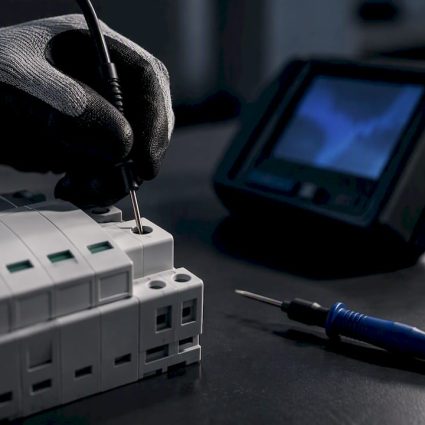
The measurement layer is the foundation. Current transformers (CT clamps) attached to the main panel feed real-time consumption data to the system, often through Modbus or TIC (télé-information client) protocols on the main meter. Without accurate measurement here, everything downstream is guessing.

The control and supervisory layer is where the decisions happen. An energy management system (EMS) or charge point management system (CPMS) receives the measurement data and sends commands to individual chargers, frequently using OCPP (Open Charge Point Protocol) to communicate regardless of charger brand. This is also the layer that logs sessions, generates reports, and, in some setups, talks to the utility for demand response signals.
Shedding logic varies by installer and use case:
- Priority-based: certain vehicles or users always get full power first (a fleet manager’s van over a visitor’s personal car, for instance).
- Round-robin: chargers take turns getting full power in rotation.
- Minimum-service: every active session gets at least a baseline current, even during peak load, so no one gets fully cut off.
A typical sequence: the CT clamps detect consumption approaching the contracted limit, the EMS calculates how much reduction is needed, it sends throttle commands to lower-priority chargers, and once total load drops, it restores power gradually rather than all at once, which avoids a rebound spike that could trigger the exact problem it just solved.
Pro Tip:Ask your installer specifically how reconnection is staged. A system that restores every charger to full power simultaneously after a shed event can cause a second overload within minutes, which defeats the entire purpose of the setup.
The Regulatory Baseline Every IRVE Project Must Meet
France’s regulatory framework for EV charging infrastructure sets a hard line at 3.7 kW. Below that threshold, certain private installations have some exceptions. Above it, decree n°2017-26 requires a professional installer holding the applicable IRVE qualification.
This isn’t paperwork for its own sake. The qualification exists because higher-power charging infrastructure interacts with building electrical systems in ways that carry real fire and shock risk if done wrong.
What this means practically for anyone planning a project:
- Any charger installation above 3.7 kW needs a qualified IRVE installer, full stop, with limited exceptions for low-power private sockets.
- Metering and reporting choices often depend on this qualification: some subsidy programs and grid connection processes require documentation from a certified installer to proceed.
- Subsidy eligibility, including certain ADVENIR-style programs, frequently hinges on supervisory software being present and properly configured, which ties the regulatory requirement directly to the technical choices covered above.
Skipping this step doesn’t just risk a fine. It can void insurance coverage and block access to subsidies that would have offset a meaningful chunk of installation cost.
Why Load Shedding Beats a Power Upgrade for Most Sites
A subscription power upgrade is a permanent, recurring cost added to your electricity bill every month for the life of the contract. Load management hardware and software, by contrast, is a one-time installation expense. That difference alone makes shedding the more attractive option for most sites weighing the two.
The math gets more favorable once you factor in foisonnement, the calculation of realistic simultaneous demand rather than worst-case demand. Few sites actually need every charger running at full power at the same moment. A well-calculated foisonnement coefficient combined with intelligent scheduling can let you deploy significantly more chargers on the same subscribed power than a naive sizing approach would suggest.
Pro Tip:An audit that produces a tailored foisonnement coefficient for your specific site is often the single most valuable deliverable in the entire planning process. Generic assumptions from a brochure rarely match how your building actually behaves.
That said, a panel or service upgrade remains the right call under specific conditions. If your site’s baseline consumption sits constantly near its contracted limit, even before adding EV charging, dynamic shedding will produce slow charging and frequent pauses no matter how well it’s configured. Fleet depots with high, sustained simultaneous demand often hit this wall. When shedding starts fighting your actual operational needs rather than just smoothing out occasional peaks, that’s the signal an upgrade has become necessary rather than optional.

Your Installation Checklist Before Signing a Contract
Get these items confirmed before any installer starts pulling cable. A rushed audit is the single most common source of expensive retrofits.
- Load profile analysis. Ask for actual consumption data over a representative period, not an estimate based on square footage or occupancy alone.
- Foisonnement calculation. Confirm the installer calculates a coefficient specific to your site rather than applying a generic industry default.
- Future growth assumptions. Clarify how many additional chargers the system can support without requiring new metering hardware.
- Metering compatibility. Ask whether the CTs and main meter are MID (Measuring Instruments Directive) certified or non-MID; MID certification matters if you plan to bill tenants or employees for usage.
- OCPP compatibility. Confirm the supervisory software communicates via OCPP so you’re not locked into one charger manufacturer for future expansion.
- Reporting access. Ask what logging and reporting the supervisory system provides and whether you can export data for your own records.
Pro Tip:Ask directly about minimum current guarantees. Some systems can reduce a session to near zero during heavy shedding; others guarantee a baseline current no matter what. Know which one you’re getting before you need it.
Also ask about warranty terms specific to the load management hardware, separate from the charger warranty itself. These often come from different manufacturers and carry different coverage windows.
Troubleshooting Common Load Shedding Issues
A charging session that slows down or pauses unexpectedly usually isn’t a broken charger. It’s the shedding system doing its job, though drivers who don’t know that will often assume something’s wrong.
Some EV and charger combinations require a session to be manually restarted or re-authenticated after a forced stop, which catches drivers off guard the first time it happens. Good driver communication, whether through an app notification or a screen message explaining the pause, reduces confusion significantly and cuts down on unnecessary support calls.
Before assuming there’s a hardware fault, check these:
- Pull the meter trace or CT clamp logs to see whether an actual overload event triggered the shed, or whether the threshold is set too conservatively.
- Review charger fault logs for error codes unrelated to load management, like a bad connector or a communication dropout.
- Verify CT and meter calibration annually; drift here causes both false triggers and missed real ones.
- Test fallback behavior after any firmware update, since software changes occasionally reset threshold settings to default values.
Why Load Management and Lightning Protection Need to Be Planned Together
Adding load management hardware after a basic charger installation almost always means opening the panel back up, running new cable for CT placement, and finding space in the TGBT (main low-voltage panel) that often wasn’t planned for. That retrofit work adds days and unplanned cost that a proper upfront audit avoids entirely.
The same audit logic applies to electrical protection. A charging installation adds load paths and metering points that change how surge events and grounding faults propagate through a building. Coordinating these concerns from day one, rather than treating IRVE and protection as separate projects, prevents the kind of retrofit surprises that catch installers off guard mid-project.
A thorough feasibility study should cover:
- Surge protection sizing appropriate to the new electrical loads introduced by charging infrastructure.
- Grounding system verification against NF C 15-100 requirements, particularly at connection points serving both chargers and sensitive equipment.
- A documented risk analysis identifying where existing protection falls short of what the new installation demands.
What We’d Tell Homeowners, Copropriétés, and Fleet Managers
Homeowners with one EV rarely need more than static shedding paired with a simple priority rule against their water heater or HVAC. Copropriétés and workplaces should default to dynamic management from the start, since resident and employee charging patterns are too unpredictable for fixed rules to handle well.
Fleet managers running high, sustained simultaneous demand should request a full audit before assuming shedding alone solves the problem; sometimes an upgrade really is the answer, and consulting electrician SEO services can help you find qualified professionals to assist with your project’s marketing and growth. Whatever your situation, pair smart charging with basic efficiency measures like scheduled charging windows rather than treating load management as a single fix for every constraint.
— INDELEC
Getting a Proper IRVE Audit Before You Install
A recommended approach to EV charging infrastructure treats it as a site-wide risk issue rather than a single-component purchase. That matters because a charger installed without coordinated grounding and surge protection review often needs expensive rework later, exactly the retrofit scenario this guide has walked through.

Indelec’s mobility solutions cover the full sequence: a site audit and technical study to size your load management approach correctly, installation of qualified IRVE infrastructure, and integration with surge protection and grounding work through Indelec’s protection contre la foudre services. Facility teams managing EV rollout alongside electrical protection requirements benefit from a coordinated plan rather than separate contractors working independently.
The typical process begins with a site visit, followed by a written report outlining load profile, foisonnement calculation, recommended equipment, and then a formal estimate. If you’re weighing a charger rollout against a looming subscription upgrade, request an audit before committing to either path.
Where to Verify the Details Yourself
Read decree n°2017-26 directly for the legal text on installer qualification, and consult APAVE’s guidance on integrating load management during IRVE design for technical planning standards.
Sources
- Qu’est-ce qu’une borne de recharge avec délestage dynamique — ENGIE
- Décret n°2017-26 relatif aux infrastructures de recharge pour véhicules électriques — Legifrance
- Optimisation puissance souscrite : Éviter les surcoûts IRVE — Nexteneo
- Load Shedding — Elinta Charge
FAQ
What Is Load Shedding for an EV Charging Station?
Load shedding is an automatic system that reduces or pauses EV charging when a building’s total electricity use gets close to its contracted power limit. It typically works by modulating charging current in real time rather than cutting power off abruptly, so charging usually slows down before it stops.
What Are the Current Regulatory Requirements for IRVE Installations?
Any charging installation above 3.7 kW must be installed by a professional holding the applicable IRVE qualification under decree n°2017-26. Lower-power private sockets have some exceptions, but the qualification requirement also affects subsidy eligibility and grid connection documentation.
Is a Load Shedding Device Mandatory?
There’s no blanket legal requirement to install a load shedding device on every EV charger. In practice, though, buildings with limited subscribed power or multiple chargers need one to avoid breaker trips, and some subsidy programs require supervisory software that effectively includes shedding functionality as a condition of funding.
What Does Electrical Load Shedding Mean in General?
Load shedding is the controlled reduction or disconnection of electrical loads to prevent equipment overload, whether that’s on a building panel or a wider utility grid. In EV charging specifically, this usually means modulating charger output or pausing lower-priority sessions rather than a full shutdown.
Can Dynamic Load Management Replace a Power Upgrade Entirely?
For most residential, workplace, and mixed-use sites, dynamic load management combined with an accurate foisonnement calculation can avoid the need for a subscription upgrade. Sites with consistently high, sustained demand near their existing capacity limit, like intensive fleet depots, often still need an upgrade regardless of how well the shedding system is configured.