Business Lightning Insurance in France: What Is Covered
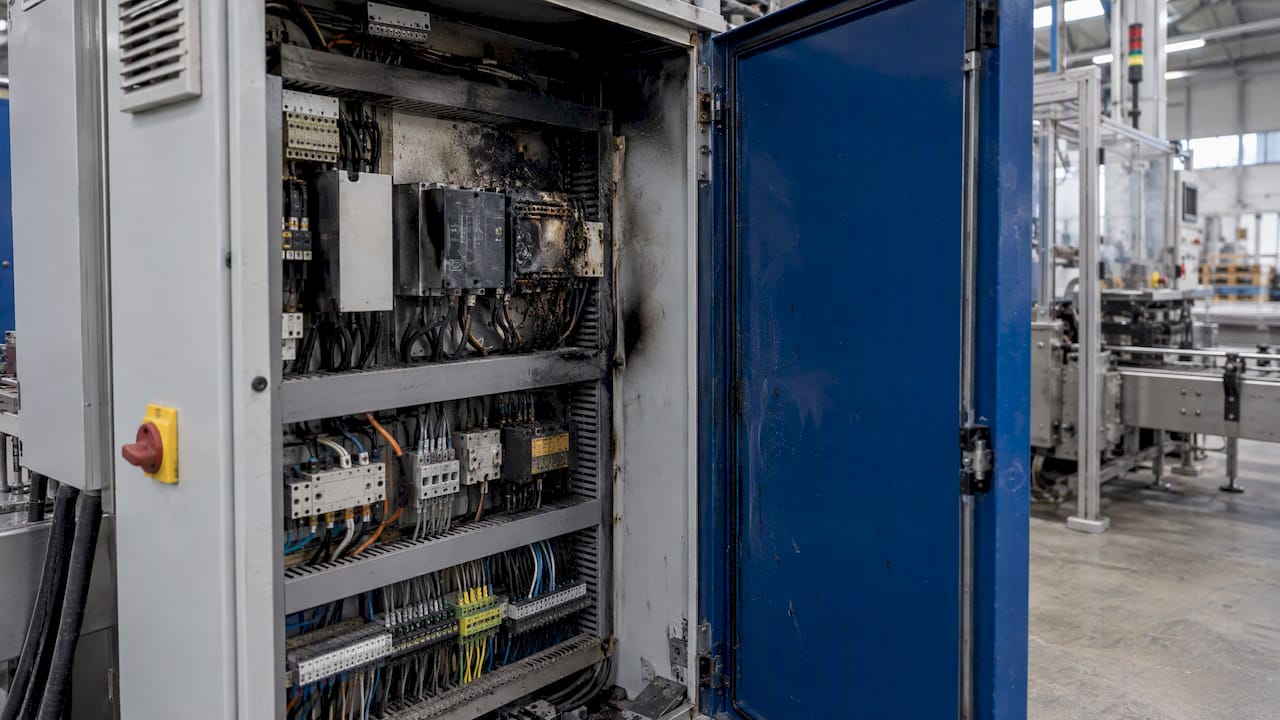
In France, lightning damage to a company is not covered by one dedicated “lightning policy”. It is covered, or not, through the electrical damage, fire and storm guarantees of your professional multi-risk policy, and through the natural-disaster scheme only in specific cases. Insurance is also not a legal substitute for protecting the site: if you operate a classified installation (ICPE), you have regulatory duties that no policy can discharge. This guide explains what to check in your contract, how to file a claim, and where prevention changes the picture.
TL;DR
- Lightning losses are usually paid under the electrical damage guarantee, the fire guarantee or the storm guarantee of a professional multi-risk policy. If none was subscribed, your options narrow sharply.
- Ceilings, deductibles, depreciation and maintenance-related exclusions decide the real payout. Read them before the storm, not after.
- Report a claim within the contract deadline, which by law cannot be shorter than five working days, and keep photos, invoices and proof that lightning struck.
- ICPE sites must run a lightning risk analysis, install the measures a technical study defines, and have them verified. Insurance does not replace any of it.
- A documented, verified protection system is the best answer to both the risk and the insurer’s questions.
Table of Contents
- What business insurance covers when lightning strikes
- What is excluded, capped or conditional
- Is lightning insurance mandatory for a business?
- ICPE sites: protection is a regulatory duty
- What to do after a lightning strike: the claim, step by step
- Perspective: why we treat insurance as the last line, not the first
- Prevention that supports your insurance position
- Your pre-renewal checklist
- How Indelec helps
- FAQ
- Sources
What business insurance covers when lightning strikes
A strike can hurt a company in three ways: a direct hit that starts a fire or damages the structure, a surge that travels through power or data lines and burns electronics, and the operating losses that follow. Each is handled by a different guarantee.
Electrical damage. This is the guarantee most often triggered. One major insurer’s electrical damage guarantee for professionals covers equipment damaged by the direct action of electricity, including overvoltage. In practice that means servers, machine controllers, alarm panels, HVAC electronics, refrigeration units and point-of-sale systems.
Fire and storm. A professional multi-risk policy can cover buildings, stocks and equipment against electrical damage, fire and storm damage. If lightning ignites a roof or a warehouse, the fire guarantee is the one that responds, and it normally carries far higher limits than the electrical damage cover.
Business interruption. This is where many companies are caught out. According to the French government’s business portal, business-interruption losses are automatically covered only for natural-disaster risks under the contracts it describes. For a lightning strike that is not a recognized natural disaster, operating losses depend on whether you bought an extension for them. Ask your broker in writing whether your loss-of-income cover is triggered by an electrical damage or fire event.
| Type of loss | Guarantee that usually responds | Point to verify in your contract |
|---|---|---|
| Fried electronics after a surge | Electrical damage | Ceiling, deductible, depreciation |
| Fire started by a direct strike | Fire | Building and contents limits |
| Roof or facade damaged by a storm | Storm | Wind and storm definition |
| Lost revenue while the site is down | Business interruption extension | Whether it applies to non-disaster events |
| Damage under an official disaster decree | Natural-disaster scheme | Requires multi-risk cover |
What is excluded, capped or conditional
The headline guarantee is rarely the whole story. Four mechanisms typically reduce a payout.
Ceilings and deductibles
Electrical damage cover is often capped well below fire cover. One bank-distributed professional multi-risk policy shows ceilings from €2,000 to €1,000,000 for electrical damage, depending on the option chosen, along with separate ceilings for property damage. A company with €300,000 of production electronics on a €20,000 ceiling is effectively self-insuring the difference.

Depreciation
Insurers may apply a depreciation coefficient to electrical appliances, as one insurer’s guide to lightning claims points out. An eight-year-old machine controller will not be reimbursed at the price of a new one unless your contract says “replacement value” (valeur à neuf). Check the wording for each equipment category.
Maintenance-related exclusions
The same policy lists as exclusions breakdowns due to normal wear and damage caused or worsened by a lack of repair or maintenance. This clause matters for lightning: if a surge protector was visibly degraded or an earthing connection was corroded and never checked, an insurer has an argument to contest the claim. Maintenance records are therefore evidence as well as good practice.
The natural-disaster fallback
If you did not subscribe the relevant fire or electrical damage guarantee, the only route mentioned in that insurer’s guide is an officially recognized natural-disaster state, which in turn requires professional multi-risk insurance. When such a state is declared, indemnification covers direct material damage and essential repair costs, including architect and geotechnical study fees. Do not plan around it: a single lightning strike on one building is rarely the kind of event that triggers such a decree.
Is lightning insurance mandatory for a business?
There is no general legal obligation to insure a company against lightning damage. What the law does impose is a duty to keep the workplace safe. Under the Labor Code, employers must maintain electrical installations in conformity with their design rules and ensure their maintenance, upkeep and verification. The national occupational safety institute further describes maintaining, monitoring and regularly verifying installations as part of electrical-risk prevention.
So the two questions are separate:
- Insurance transfers part of the financial consequence of a loss. It is a contractual choice, though a lender, landlord or client may require it.
- Site protection reduces the likelihood and severity of the loss, and for some sites it is a regulatory obligation.
A policy will not protect an operator from the consequences of non-compliance. For an ICPE site, an insurer, an inspector and a court will all ask the same thing: was the lightning risk assessed, and were the measures applied and verified?
ICPE sites: protection is a regulatory duty
For installations covered by Article 16 of the 2011 amending order, a competent organization conducts a lightning risk analysis (ARF) based on NF EN 62305-2 or a recognized technical guide. The measures are then set by a technical study and installed and verified as the regulation specifies. The same text required radioactive lightning rods to be removed before 1 January 2012 and sent to the radioactive-waste stream, which is worth remembering if you inherited an old site.
The verification rhythm is fixed: a visual check every year and a complete check every two years by a competent organization. The operator also keeps a logbook, and the ARF, technical study, verification and maintenance notice, logbook and verification reports must be available to the classified-installations inspectorate.
If you run such a site, our ICPE lightning protection compliance guide walks through the sequence, and the lightning standards overview explains how the reference documents fit together.
What to do after a lightning strike: the claim, step by step
- Secure the site and people first. Cut power to affected circuits only if it is safe, and keep anyone away from visibly damaged installations until a qualified electrician has checked them.
- Document everything before repairs. Photograph damaged equipment, burn marks, tripped protective devices and the building. Keep the damaged items if possible: the insurer or its expert may want to inspect them. Insurers’ own guidance asks for details of the incident, photos, invoices for damaged goods and an estimate of the damage.
- Prove that lightning occurred. A lightning-strike certificate supplied by Météo-France is an official document recognized by all insurance companies in France and can confirm whether lightning was recorded in your area. Request it early, especially if the damage is a surge with no visible burn.
- Notify the insurer within the deadline. Under the Insurance Code, the insured must report a claim as soon as they become aware of it, within the policy’s deadline, which cannot be less than five working days. Where the contract provides for forfeiture of rights for late reporting, the insurer can invoke it only if it proves the delay caused it prejudice, and not if the delay came from an unforeseen event or force majeure. Many insurers let you declare through an online customer area or through your agent, as AXA does for storm claims.
- Take emergency measures without waiting. Protect stock, prevent further damage and keep the receipts. Do not scrap or replace major equipment before the insurer’s expert has had the chance to see it, unless safety requires it.
- Find the cause. After a strike, have the lightning protection and surge devices inspected. If the claim is accepted, the insurer may ask what was done to avoid a repeat.
Perspective: why we treat insurance as the last line, not the first
We have worked on lightning protection since 1955, with more than 280,000 installations behind us, and the pattern we see is consistent. Insurance pays for what has already broken. It does not restore a production line’s lost customers, a delayed delivery or the trust of a client whose data was offline for three days. It also pays according to a contract whose limits and exclusions most companies read only after a loss.

Our view is that the sequence should be: assess the risk, protect against it with measures sized to the site, verify and document them, then insure what remains. A lightning risk analysis and technical study turn an abstract fear into a list of exposures: which buildings need an air-termination system, where the downconductors should run, which incoming lines require surge protective devices, and how good the earthing really is. Once that exists, the conversation with your insurer changes. You can show what protects the site, who verified it and when.
There is a second reason. Surge damage is the most frequent lightning loss and the most contestable one, because it often leaves no visible mark. A site with coordinated surge protection, a lightning strike counter and a maintained logbook has facts on its side when it files a claim, and far fewer claims to file.
— INDELEC
Prevention that supports your insurance position
The technical measures fall into two families.
External protection captures and diverts a direct strike: lightning rods, masts, meshed cages and downconductors, connected to a low-resistance earthing system. Where soil is difficult, deep earth grounding drilling can reach better ground.
Internal protection deals with surges entering by cables. Surge protection devices installed in the main switchboard and close to sensitive equipment limit the voltage that reaches your electronics. For a practical walk-through, see our guide to surge protection in industrial facilities. The same logic applies to electrical safety generally: the occupational safety institute lists designing installations for safety, with isolation, barriers and enclosures, among the pillars of electrical-risk prevention.
After installation, protection only works if it is checked. Earthing values drift, surge devices wear out after absorbing events and connections corrode. Our article on why regular maintenance matters for facility managers explains the routine, and a lightning strike counter gives you a record of events that actually hit the structure.
Your pre-renewal checklist
Before your next policy renewal, put these questions to your broker and get the answers in writing:
- Does the policy include an electrical damage guarantee, and does it explicitly cover lightning and overvoltage?
- What are the ceilings for electrical damage, separately from fire and buildings?
- Is equipment reimbursed at replacement value, or with depreciation? From what age?
- Does the loss-of-income cover respond after a fire or electrical damage event, or only after a recognized natural disaster?
- What are the deductibles, and do they differ for electrical damage?
- What maintenance obligations does the contract attach to protection devices, and what proof is expected?
- What is the exact reporting deadline, and how do you declare?
Then assemble your own file: the lightning risk analysis, technical study, installation report, verification reports, the maintenance log and a list of critical equipment with purchase values. When something happens, that folder saves weeks.
How Indelec helps
We supply the full chain a site needs to reduce lightning exposure and to document it: lightning risk analysis and technical study, installation, and verification and maintenance, backed by our own range of rods, earthing, downconductors and surge protection. We work with industrial, commercial and infrastructure clients, including ICPE operators who must keep an inspection-ready file.

If you want to know where your site stands before your next renewal or inspection, start with a risk analysis. You can also browse our lightning protection services or read our lightning risk assessment guide.
FAQ
Does my company’s multi-risk insurance automatically cover lightning?
Not automatically. Lightning damage is paid through guarantees such as electrical damage, fire or storm, so it depends on which ones you subscribed and on their limits. Check the contract’s definitions and ceilings rather than assuming the multi-risk label covers everything.
How long do I have to report lightning damage?
Your contract sets the deadline, but by law it cannot be less than five working days from when you learn of the loss. The parties may agree a longer period. Declare as early as you can and send supporting documents afterward.
Will my insurer pay the full replacement price of damaged equipment?
Only if your contract provides replacement-value cover for that equipment. Otherwise the insurer may apply a depreciation coefficient to electrical appliances, and a deductible and a ceiling also apply. Ask for these figures before a loss.
Can insurance replace a lightning protection system on an ICPE site?
No. For covered ICPE installations, the regulation requires a risk analysis, a technical study, installed measures and periodic verification by a competent organization, with documents available to inspectors. Insurance addresses the financial loss, not the compliance duty.
How do I prove that lightning caused the damage?
A Météo-France lightning certificate is the document insurers recognize to confirm that lightning was recorded in your area. Combine it with photos, the damaged equipment, repair estimates and, for surges, an expert’s findings.
Sources
- Assurer son entreprise contre les risques naturels (Service-Public Entreprendre)
- AXA, garanties Atouts Pro et Atouts PME
- MAPA, foudre sur votre local commercial
- Pacifica, multirisque professionnelle (document d’information)
- INRS, prévention du risque électrique
- INRS, réglementation du risque électrique
- Légifrance, arrêté du 19 juillet 2011, article 2
- Légifrance, Code des assurances
- Connexion France, lightning reaction from Météo-France
- AXA, orage : quelles démarches pour votre entreprise
- Generali, indemnisation d’une entreprise après tempête